Showing posts with label The Chase. Show all posts

Thursday, 21 April 2016

The importance of book cover design - advice from award-winning designer JD Smith


When you're in a bookshop, what draws you to pick up a book? It might be that your favourite writer's name is on it or your best friend told you it was a great read. Or it might be the cover seduced you, startled you, lured you in. I'm delighted to welcome Jane Dixon-Smith to Literascribe. As JD Smith, she's a book cover designer who has developed a loyal customer base not just because of the quality of her covers but because of the ease of working with her. I should know! I commissioned Jane to produce the cover of The Chase when I republished it. She also produced postcards for me, and has designed all the logos for my Fictionfire Literary Consultancy.

Jane has just written a book, The Importance of Book Cover Design and Formatting for Self-Publishing Authors - I think the title tells you all! In it she discusses the elements of good cover design, what is and isn't effective - and why - and how writer and designer can work together successfully. She shows you examples throughout the book - it's an enlightening and invaluable resource for all writers, whether self-publishing or not. (I'm also delighted to feature as one of the case studies!)

Here's my interview with Jane:

Could you briefly state how you came into the world of book cover design? 
I’ve always worked as a graphic designer, and when I was made redundant a number of years ago my two passions (books and design) collided and I began specialising in book cover design.

What do you enjoy most about doing this work?
Working with authors. They are so excited about working on their book cover, having spent so long working on their novels. It’s a really special experience, and so much more rewarding than working on brochures and catalogues and so on for corporate clients.

What do you see publishers and self-publishers most often getting wrong when agreeing to commissioned designs or designing them themselves?
Not hitting the right genre, or generally cutting costs and either designing themselves or commissioning cheap design.

Do you think authors can design their own covers effectively – or should they always pay for a professional to do it?
I’ve always said I would never say authors should have a professionally designed cover. It really depends on their goal and what they want to achieve. Are they serious about sales? Do they want to publish purely for their own personal enjoyment and aren’t bothered about sales? Is the book a freebie and if so is the cover on display to entice a reader? I think if people are serious about sales then they need a pro-cover, unless they have a very good eye and an extremely good understanding of why book covers work.

The beautiful cover for The Chase,
which Jane designed.
How important is it to have input from the author or publisher commissioning you? What sort of information is useful to you?
Hugely important. There’s so many markets you can aim a book at it’s really important to know which one the author or publisher intends to aim for, otherwise the cover won’t work. To get this information I usually ask which authors in the marketplace writer similarly, whose readers are they aiming for and so on.

Do you read the books for which you produce cover designs?
No, the marketplace is more important than the book, and the author or publisher is in the best place to state which market they want to go for, which dictates the design much more than the content of the book, although I will ask for descriptive passages of certain elements we might use on the cover.

How many iterations of the design are you happy to produce for an author? Is it ever frustrating to see an author opt for a choice you feel isn’t the right one for their book and its market?
As many as it takes, usually, although the way I work generally means we’re following a path to the right design and the author has input all the way. It is frustrating if I think another design is the right design, but it’s the author’s call if they feel it’s the right one for the book. I’ll always say what I think, it’s up to them to take on board my opinion or not.

How important is it for an author to have a range of publicity material in order to promote their book (apart from the power of the book cover itself)? Which kind(s) of publicity material do you think the most useful and worth spending money on (e.g. bookmarks, postcards, business cards, flyers, posters, banners, social media banners etc)? If an author on a limited budget could choose only one of these, which should it be?
It depends on the authors marketing tactics, whether they attend a lot of events in person or are they more into social marketing or both. Bookmarks, postcards and any printed materials are great for events, and banners for social media.

JD Smith
You’re an author as well as a book cover designer – did you find it hard designing your own covers? Did this give you any extra insight that has fed into how you design for others?
I find my own really easy. I know what I want and I only have to please myself. I don’t do various designs, I just do what I know works and tweak until I’m happy, whereas I produce options for clients because they need to have feedback into the process.

What three key pieces of advice would you give to any author intending to commission a cover designer?
Ask for recommendations. Look at the portfolios of the designers. If you’re not happy with the quality of the covers they have in their portfolio (which should be the best covers they’ve produced) then  you aren’t going to be happy with the cover they design for you. And ask them about how they work before engaging them to design your cover. Does the process make sense? Is it comprehensive? Do you feel comfortable?

Thanks very much, Jane!

Jane is also a novelist in her own right and I’ll be interviewing her again about her series of historical novels featuring Zenobia, Queen of Palmyra, in a few weeks’ time.

JD Smith is an award-winning book cover designer and author of The Importance of Book Cover Design, available from Amazon

Finally, last call for this weekend’s Fictionfire by the Spires retreat weekend, with four workshops focusing on how to create rich, believable characters, lots of peaceful time to write, delicious food, encouragement and support. The retreat takes place here in Oxford on Saturday 21st and Sunday 22nd May – you can come for the whole weekend or on a single day basis. You can find out full details of the schedule and the content of the workshops by going to http://www.fictionfire.co.uk/fictionfire-by-the-spires - and here's my logo, designed by Jane!


Monday, 10 March 2014

The Writing Process Blog Tour


This week I’ve been invited by Lindsay Stanberry-Flynn to take part on this blog tour, where writers take turns to answer four standard questions about their writing and their writing process. Lindsay’s excellent contribution to the tour can be found here. I’ve invited Essie Fox, Catriona Troth and Sharon Zink to join the tour next week, so look out for their posts on 17th March (you’ll find more details about each of these wonderful writers at the end of this post).

So, here goes!

Question 1: What am I working on?

 The commissioned cover for the story collection
Currently two projects take priority: the first is a historical novel which I’ve been writing for a couple of years, a story of journeys, secrets and consequences. It’s a dual narrative set in the 1830s and 1880s in Scotland, London, Spain and Canada. I’ve absolutely loved writing it and the first draft is nearly complete, but there’s a lot of work still to come in terms of revision. In the meantime, I’m hoping to publish a collection of short stories about famous writers in the next two or three months, called Informed with Other Passions. The stories are told from the sidelines, presenting fresh insights into the trials and triumphs of literary greatness. The title story was actually written a number of years ago. It deals with Dickens’ affair with Ellen Ternan, so when in January I learned that a film on that topic was about to be released, I thought it would be a good idea to get my story out too – and then I thought it would be a good idea to write more stories for an anthology …

Visit Fictionfire Press and sign up for the mailing list for news and special offers.

Question 2: How does my work differ from others of its genre?

The paperback cover of The Chase 
I swear that everyone who’s taken part in the blog-tour has wrestled with this question! I think it can be hard for writers to define the individual quality of their writing – plus this question uses the ‘genre’ word and to try to locate your work in a particular genre can be a challenge, as I found when I wrote my first novel, The Chase. It was originally published by Bloomsbury and I republished it under my own Fictionfire imprint last year. When it came to categorising it on Amazon, I struggled: the novel has historical flashbacks, it has relationship drama, it has suspense elements and supernatural elements, it is satirical … it is all of these things but none in totality. So the ‘literary fiction’ category is all that it would fit, which reduces visibility to readers who are searching. It’s something of a relief, then, that currently I’m writing what can clearly be defined as historical fiction!

My Bloomsbury editor described the books on her list as ‘literary fiction with a commercial edge’ and I think that’s what I aim to produce: I love to use precise imagery, evoke atmosphere, consider challenging questions, but I also hope to write stories which are page-turning and emotionally involving. The Chase is set in France and I’ve described it as Joanne Harris meets Daphne du Maurier – it’s Chocolat, but with a darker bite!

Question 3: Why do I write what I do?

The magical location of Cornwall 
Writers notice things. Writers make connections. Writers are always saying to themselves ‘What if ..?’ I’m no different. I’m also drawn very strongly to history – how it informs location and event. Contemporary life is influenced by the layers of the past. People of the past were people, in the end, just like us, even though influenced by different ways of behaving or of seeing the world. In the new novel (I’m not giving away the title just yet!) and the short stories, I feature real people interacting with characters of my own invention. In The Chase, historical vignettes reveal the past of Le Sanglier, the French house to which the central characters retreat – and that past reinforces the messages of the main story. Everything is interwoven – that fascinates me. I’m also a writer for whom location works as an inspiration, so I love to anchor stories in both time and place. Even in my as-yet unpublished children’s novel, Hinterland, which was shortlisted for Pan Macmillan’s Write Now prize last year, location (Cornwall) plays a huge part in not just providing a setting but triggering plot and atmosphere. Location should never just be wallpaper.

Question 4: How does your writing process work?

Staying true to my own writing is a challenge: as a literary consultant, I live with other people’s stories in my head and sometimes, because I have to think of their plot issues and possible solutions, they push my own stories out of the way!

I constantly have ideas, whether they’re first lines, newspaper reports, details in biographies, or places I’ve visited, and I keep an Evernote record of every one, plus a notebook, because ideas are slippery customers and will slither out of your brain as quickly as they slipped in, if you don’t watch out.

I know 90% of those ideas will not come to fruition. Some, though, start to burgeon and send out shoots. When it comes to historical writing, once I have my notion and a rough shape of the story, then next process is steeping: reading in and around the topic and the period until I start to think in the cadences and language of that era, until it is as natural as breathing. The risk is that one steeps too long! Research is both friend and enemy: you need to do it to make the work ring true, but too much of it is displacement activity and the story is endlessly postponed. With the new novel, I pushed the story along without knowing all I might know about the subject – as I write, I put in square brackets what I need to check or reinforce with research later.

I’m a night owl: after midnight I find I can enter a different mental state and the words and ideas flow, so that’s when I prefer to write, even though on occasion I have literally fallen asleep while writing – yet the fingers kept moving over the keyboard! When I write, I write fast. There are two techniques I recommend here: one is to set a word quota for each writing session – for me it’s normally 1,000 words. The other is not to worry about the quota so much as the regularity of those writing sessions, so the key to that is to pin a calendar on the wall and draw a big red cross on every day on which you write, even if all you produce is a couple of hundred words. This works brilliantly: as those lines of red crosses accumulate, you really don’t want to miss a day – you don’t want to see a blank, like a missing tooth in a dazzling smile!

Finally, I don’t worry too much when I’m writing that first draft: never try to edit as you write. There are times when the wind is in your sails and the words flow with ease and precision, but frequently when you’re composing you hate the words, they’re coming out in the wrong order, they’re derivative, they’re plodding, and where the hell did your plotline go! Or at least that’s what The Critic inside your brain says to you. Shut The Critic up and let The Creator set to work first. The Critic can join you later as you tackle the next stage in the process – refining the work to publishable standard.

Links:

The current programme of Fictionfire Focus Workshops is here

Details of upcoming Fictionfire Day Courses at  beautiful Trinity College Oxford:

May 10th Writing Fiction: Get Inspired and Stay Inspired  - see more here.

May 11th How to Publish and Market your Book - see more here.

Early Bird booking discount on these available until March 16th.

Here are my lovely writer friends who’ll be answering these four questions on their blogs next week:

After a career in publishing and then in the world of art and design, Essie Fox now writes Victorian novels which are published by Orion Books. The Somnambulist was shortlisted for Debut Novel 2012 at the National Book Awards and has now been optioned for TV/film by Hat Trick Productions. This novel was followed by Elijah’s Mermaid. Her latest, The Goddess and The Thief, is an exotic tale of theft and grief and obsession that combines ancient stories of Indian myth with the fraudulent trade in spiritualism taking place in Victorian parlours. Follow Essie on Twitter @essiefox and on Facebook at Essie Fox Books. Her website is www.essiefox.com

Catriona Troth is the author of the novella, Gift of the Raven, and the novel, Ghost Town. She is a former researcher turned freelance writer, a regular contributor to Words with Jam magazine, and a proud member of the Triskele Books author collective."


A former literature academic with years of teaching and editing experience for consultancies and publishers worldwide, Dr Sharon Zink’s first poetry collection, Rain in the Upper Floor CafĂ© was published when she received the title of Shell Young Poet of the Year at the age of seventeedn. She has also been named as Writers Inc. Writer of the Year and shortlisted for the Raymond Carver Prize and in The New Writer short story competition four times running (including being named as Editor’s Choice). Her fiction has appeared in anthologies and journals in the UK, US and in translation in Mexico and a production of her work at Edinburgh Festival received an award from The Scotsman. Her first novel, Welcome to Sharonville, is being published by Unthank Books in June 2014. You can find more at www.sharonzink.com


Monday, 3 June 2013

Triskele Books Launch Party

One of the things I love best about social media is that you make wonderful connections with people you'd never have met in the normal course of affairs. Connections lead to friendship, advice, support and information - all of which may lead to further connections, friendship, advice ... you get the picture.

Some time ago, having decided to republish my novel myself, I set about looking for a cover designer. I wanted my book to look good. Professional. Eye-catching. Effective at thumbnail size. Distinctive. In no way amateur-looking. So, I started clicking onto book covers I liked, then finding out who was thanked by the writer for having designed the cover. I discovered Jane Dixon-Smith - and discovering her led me to Triskele Books, a writers' co-operative: Jane designed their logo and their book covers.

Liking what I saw, I started communicating with Jane and commissioned not only my book cover but logos for my consultancy and imprint. She turned out to be an absolute joy to work with: friendly, responsive, professional. I'm delighted with all she has done and fully intend to go to her again when I need future book covers designed.

With Catriona Troth
At the London Book Fair, I met another Triskele member, Catriona Troth - and saw the range of books published by Triskele on display. They struck me as being both beautiful and professional. As the rise of self-publishing continues, we all need to pay attention to the standard of book as artifact that we produce:  the Triskele writers are setting an excellent example here.

On Saturday, I went up to London to meet the other Triskele writers at their joint book-launch at Foyle's. It was a lovely event: the books were lined up, the buffet table awaited, the champagne was flowing, the atmosphere was lively and immensely friendly. It was great to meet Jane in person at last - and the other writers. Jill Marsh writes detective fiction, her latest, Tread Softly, is set in Vitoria in northern Spain. Gillian Hamer writes crime with a supernatural edge: she was launching Complicit, set in Wales. Catriona Troth draws on her Canadian background for her novella Gift of the Raven. Liza Perrat's novels are set in France, where she lives: Spirit of Lost Angels takes place against the backdrop of the French Revolution. Finally Jane Dixon-Smith has somehow found time, amidst all this cover and logo creation, to write her own novel about legendary lovers Tristan and Iseult.

What they all have in common, apart from a very beautiful and distinctive look to each, is a strong sense of place, linked frequently with the resonances of the past. Time and Place is the tagline for Triskele - and I'm very much in favour of both (which anyone who's read The Chase will know!)

During the evening, after the launch of the anthology of winners of the Words with Jam competition - oh yes, didn't I mention Jane produces that literary magazine too? - Liza interviewed each of the other writers briefly about their work. Toasts were drunk, short speeches made, books were bought ....

On the train home, I browsed happily through my purchases. All power to the Triskele writers! Here are some more photos of the night -
Jane, Gillian and Catriona at the book-signing table

Jane introduces the Words with Jam anthology

Liza Perrat interviews Jill Marsh


Friday, 19 April 2013

The Alliance of Independent Authors at the London Book Fair 2013: United We Stand

I visited the London Book Fair on Monday and Wednesday of this week, a year on from my first visit for Orna Ross's launch of The Alliance of Independent Authors (ALLi), which I blogged about here. ALLi is a wonderful organisation and is going from strength to strength: if you're considering self-publishing I can't recommend too strongly that you should join (there's a link button in the sidebar of this blog if you want to find out more).

Last year, ALLi launched in an upstairs seminar room far away from the hustle and bustle of the main Fair. This year we were down and dirty, on the shop-floor itself (though still somewhat ghettoised away from the Big Guys and the Big Publishing Stands). The Author Lounge was the focus of indie activity, sponsored by KDP, Kobo and Matador, curated by marketing specialists Authoright. A year ago, this would all have seemed ambitious. This year it became clear that maybe it wasn't ambitious enough - the lounge was heaving with people and it was obvious that authors are so keen to join the publishing party a space three times the size could easily have been filled!

The purpose of the Author Lounge was to give writers the chance to listen to talks and presentations - and even to pitch directly to agents. This is unheard of - agents inhabit the International Rights Centre upstairs: an elevator rises like a stairway to heaven from the midst of Earl's Court 1, but no humble scribbler should attempt to mount it. However, in these days of publishing flux and uncertainty (about which I'm writing a separate article), agents are descending from on high, publishing services are touting their wares to authors as well as publishers. Last year we had a toe in the door - this year we've crossed the threshold.

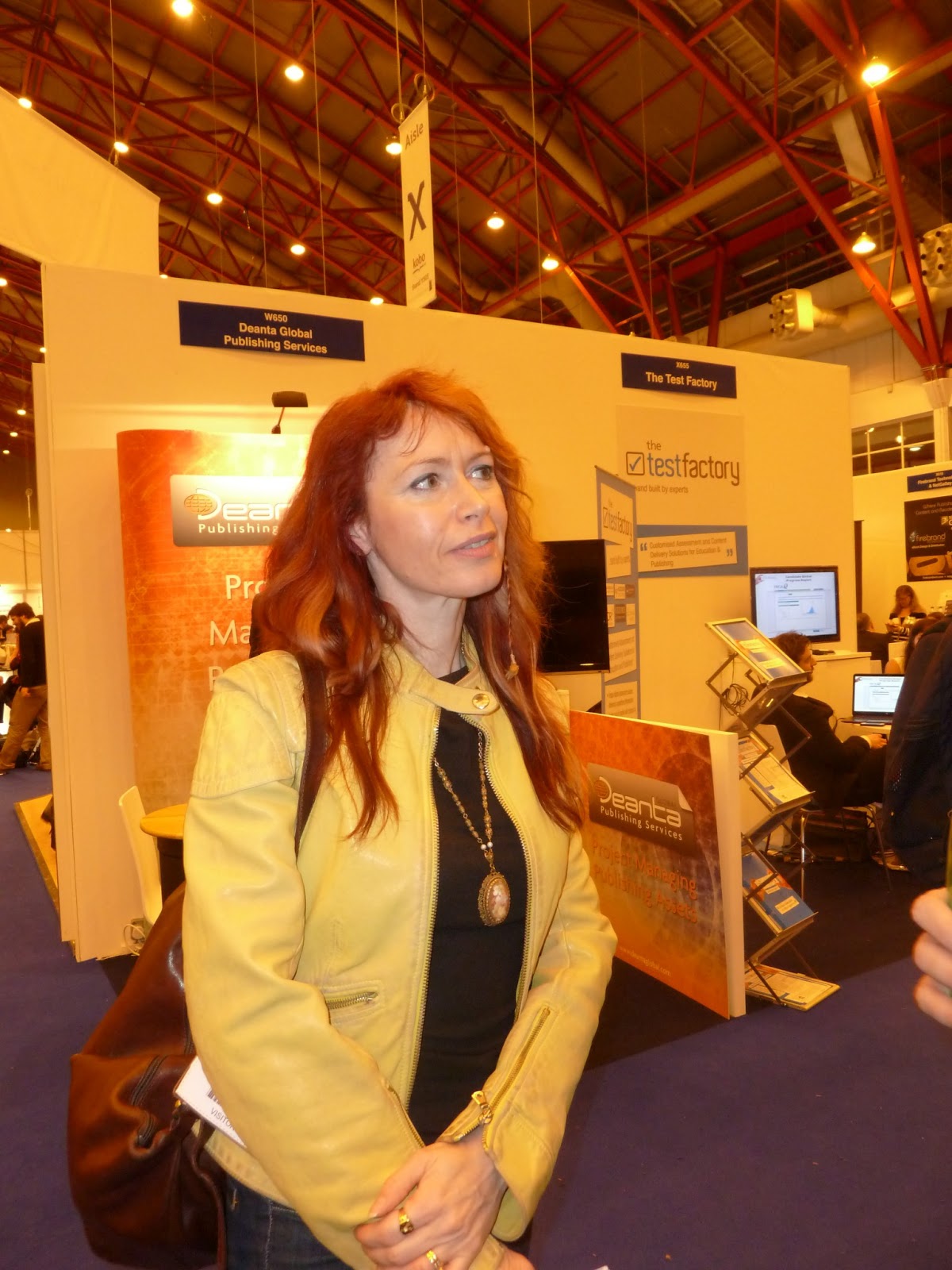
As well as attending talks and seminars,  networking proved to be a crucial aspect of attending the Fair. We all networked like crazy - and it's a process which is not only necessary but can be nerve-wracking. Orna, though, was the perfect hostess and match-maker, ensuring useful contacts could be made in an atmosphere of fun and friendship. I was able to present my newly-republished novel, The Chase, and information about my literary consultancy, Fictionfire, both to published ALLi members and to aspiring writers who're considering self-publishing.

On Monday, ALLi launched its new book, Choosing a Self-publishing Service - the title explains all! It gives advice about self-publishing and service-providers and will be updated regularly. Orna is very concerned to flag up warnings about providers who are out to scam newbie self-publishers and highlight those who provide an honest and trustworthy service. Guest-speaker C.J. Lyons, who's sold 1.3 million 'thrillers with heart' bellowed to the audience 'you're all CEO of your global publishing empire' with the same yee-haw verve that Joni Rodgers had when she told us at last year's launch that 'we're all riding the sand-worm, baby!' (And if you've never read Frank Herbert's Dune you'll have no idea what that meant!)

The crowded Author Lounge
The book-launch came on the heels of talks by representatives of Kobo, Goodreads, Troubador and KDP. I'd arrived fairly late and then couldn't get near enough to the talks to hear - as I mentioned, the place was overcrowded and I think nobody really expected the Author Lounge to be quite as spectacularly successful as it was.

Joanna Penn and Orna Ross at the party
The launch was followed by a party for ALLi members, sponsored by Amazon (!) at the nearby Pembroke Pub - more networking in an atmosphere of excitement and nervous energy.

I didn't attend LBF on Tuesday but on Wednesday I turned up, carrying the new Kobo Mini ereader I'd bought after talking to Shayna Krishnasamy at the Kobo stand on Monday about my plans to publish to Kobo now that I've already published on Kindle. I attended a truly dynamic presentation by Joanna Penn on Advanced Online Marketing. Typically, her talk was full of honest personal experience, solid facts, statistics and up-to-date ideas. She focussed particularly on the importance of keywords and keyword research, talking also about the crucial need for us to have mailing lists and an established social platform. She discussed the 'marketing funnel' leading from attention, through interest and desire, to action. And she stressed the need to build relationships - this, I think, is a central theme of the Fair and of all our self-publishing activities. You can't do it if you lock yourself away. You need to put yourself out there. When I look back at the past five years of my career, everything I've done, every blog I've commented on, every writing event I've attended - everything has led to consequences and connections I couldn't have even imagined at the start. I'm busier and more tired than I can possibly say - but I'm also happier, in the sense that there's adventure and potential in it all and the fulfilment that only comes from being in charge of your own destiny.
Joanna Penn presenting 

Finally, there was a drinks party back at the Author Lounge (though the drinks, even the water, ran out too quickly!). I want to mention all the lovely people I met, old and new friends - and thank everybody who liked the cover of The Chase! First and foremost, there's Orna herself, who is the onlie begetter of the Alliance. I can't wait to see where she takes it in the coming year! Then Joanna Penn, of The Creative Penn (go there for oodles of publishing and marketing advice), the adventurous Dan Holloway, children's writer Karen Inglis, who gave me lots of practical advice. Roz Morris - I was sorry to miss her author presentation at the Kobo stand because I was at Joanna's talk - sorry! Writers Jerome Griffin and Rohan Quine; Stephanie Zia at Blackbird Books, who'll be bringing out my friend Jacqui Lofthouse's next novel; David Gaughrean; Mark Lefebvre of Kobo; Ben Galley and finally the lovely Catriona Troth of Triskele Books - my cover was designed by Jane Dixon-Smith who also designs the Triskele covers. Scroll down for lots more pictures!

Great people, a great Fair - and here's to a great future for us all!

NOTE: there's only four weeks to go until my next Fictionfire day courses! Book now for How to Plot and Pace your Story on May 18th and Perfect Pitch: How to Craft your Submission on May 19th. For full details and to make your booking go to the Fictionfire website. To find out more about The Chase, visit Amazon or the Fictionfire Press website. The novel is now out on Kindle and other ereader formats and a paperback edition will follow.

The moon over Earl's Court at the end of Day 1

Looking out over Earl's Court 2

The unique Dan Holloway

Catriona Troth of Triskele Books

One of the big guys ...

Crowds at the AuthorLounge

Joanna Penn, Brian Felsen of Book Baby and Orna Ross

Author Roz Morris, looking pensive!


With Joanna Penn: she's holding the cover of The Chase and I'm holding my Kobo Mini with her third novel, Exodus, on it


Friday, 12 April 2013

Two exciting book announcements!

This is a very big day for me. Regular readers may have noticed this blog has been quiet for a while. This is because I've been working incredibly hard, not only in my Fictionfire role, but to edit and publish my novel, The Chase. And today's the day! The novel was originally published by Bloomsbury and the rights reverted to me some time ago. I've commissioned a new - and very gorgeous - cover and published it on Kindle, but intend also to publish it in other e-reader formats and as a paperback. I'm going to blog more about the process and about what The Chase means to me and how I came to write it in the first place, but in the meantime I wanted to announce that it's available! Please do take a look and if you read it and like it, I'd be incredibly grateful if you would review it on Facebook, your blog or Goodreads, or mention it on Twitter.

Here's what novelist and historian Alison Weir has to say about The Chase:

'This is a haunting book, skilfully written and tantalisingly unravelled. Lorna Fergusson weaves a vivid but dark tale set in the beautiful Dordogne, where past and present fuse in a page-turning mystery. I could go back to this again and again.'

Now, you know what they say about buses coming along all at once? Well, I have another announcement to make today, which I've been longing to make public for a while. My unpublished children's book, Hinterland, has reached the longlist of eight for Macmillan publishing's Write Now Prize! This is a competition run in conjunction with independent bookshops - so do visit your local bookshop and if there's a chance to do so please vote for me! I'd love to make it to the shortlist of four! I'll be blogging more about this too in the coming weeks but now feel the need to lie down in a darkened room with a bottle of smelling salts to hand - so much excitement!

Next week I'll be attending the London Book Fair, so will be blogging about that. I also have a backlog of posts to write about the Oxford Literary Festival. I'll be interviewing lovely writers Lynn Shepherd, author of A Treacherous Likeness, Tom-All-Alone's and Murder at Mansfield Park, plus Teri Terry whose novel Fractured comes out next week and is the sequel to Slated, her YA dystopian thriller, which I loved.

Now that my spring series of workshops are over, next up are my day courses at Trinity College Oxford: on May 18th How to Plot and Pace your Novel, and on May 19th Perfect Pitch: How to Craft your Submission. Cross to the Fictionfire site for more information and how to book.

Tonight the man and I will be cracking open a bottle of bubbly!